| |
| |
|
Interchangeable 1911 Front Sight |
|
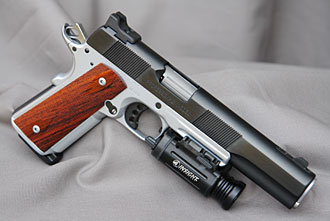
| Sights for the 1911 have evolved over decades of use in a wide variety of shooting disciplines. CCW, hunting, bulls eye, silhouette, defense, military, target, and low light shooting have all been considered during the development of different sight designs for the 1911. |
|
 |
|
| Long term shooters have seen various sight designs come and go with differing levels of acceptance and success. Sight choices for the 1911 have even included optical devices, but here we will focus on iron sight choices. |
|
 |
|
| One area of debate has always been adjustable sights versus fixed sights. Some shooters choose adjustable sights because they are generally simple to adjust with a screw driver. This helps in achieving a precise zero, and re-zeroing when a shooter changes to a different load. The drawbacks to adjustable sights on a 1911 is that they are generally more fragile, complicated, sharp, and are more likely to experience zero loss. Even top of the line adjustables will shear off screws and sight blades when installed on hard use 1911s. |
|
 |
|
| Shooters who prefer fixed sights most often cite durability as their main concern. However, they often end up carrying a pistol which is not precisely zeroed for their eye, hold, and load because standard design fixed sights have limited zeroing flexibility, especially after night inserts have been installed. |
|
 |
|
| The D&L Solution |
|
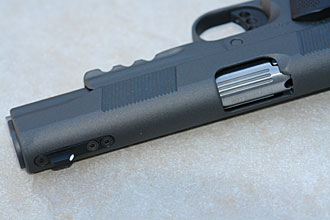
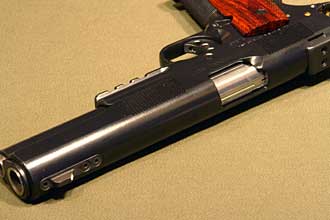
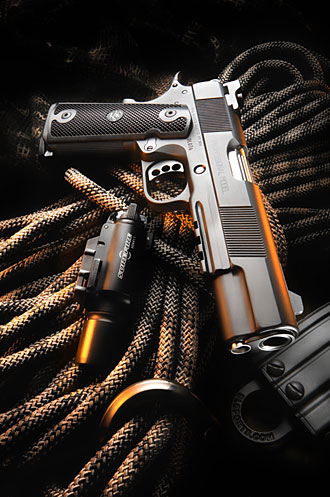
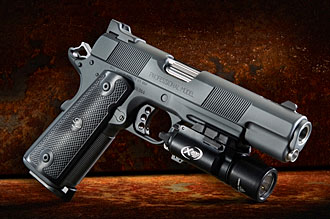
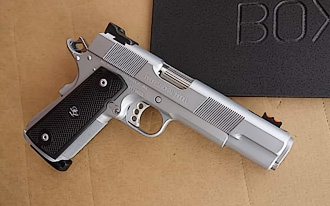
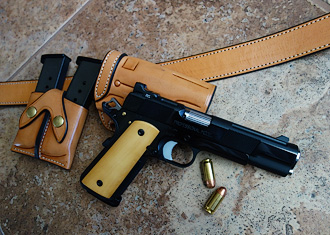
| Dave Lauck's design solution can be applied to select models of D&L Signature 1911s. This solution allows an operator to select the preferred ammunition brand, the preferred zero range, and then zero the pistol's elevation impact precisely by means of an interchangeable front sight. |
|
| Installing a taller front sight causes the impact on target to be lower. Installing a shorter front sight causes the impact on target to be higher. Windage adjustment is fine tuned by drifting the rear sight. |
|
 |
|
| Once this procedure is properly completed, you will have a precisely zeroed fixed sighted pistol which you can depend on to maintain zero under the harshest of use conditions. |
|
 |
|
 |
|
 |
|
|
|
|
| |
Dave,
If I had it all to do over again I would definitely use your fixed 1911 sight design.. They are robust quality sights that will allow the operator to use them in many ways that Novak's will not. It's just my opinion...... Anyway, had I not had the sights that are presently on the pistol that you built for me...I would have opted for yours no doubt. I believe yours are the very best fixed sights available today...bar none! ...... it only costs a little more to get the very best and it is worth the expense in the long-run....... I know you to be the very best Custom Builder of Heirloom Quality Guns presently in business and when it comes to guns that you can bet your life on I trust your judgement, knowledge, expertise, quality and reliability over anyone that I know. Not trying to blow smoke up your skirt...I believe it to be a fact and here it is in print. That's my word. I do appreciate the pistol that you built for me and it works every time...good looking too.
-
Jack Furr
Veteran Firearms Instructor / LEO
Firebase Training Academy
Former Gunsite, Thunder Ranch Instructor |
| |
|
|
)
)
)
)
)
)
)
)
)
)
)
)
)
)
)